The purpose of this toolkit is to help non -Indigenous staff and faculty better understand the experiences of Indigenous students, staff and faculty in post secondary institutions. It also provides foundational information about Indigenous cultural protocols to help create safer, more welcoming spaces on campus.
Building stronger relationships between Indigenous and non-Indigenous students, staff, faculty and community members can create opportunities for reconciliation, collaboration and positive change.

Objective
As a non-Indigenous staff and faculty member in post secondary education, reviewing this toolkit will help guide your understanding and knowledge in the following areas:
- Recognize what it means to practice allyship
- Understand the cultural significance and protocol of conducting a territory acknowledgement, inviting Indigenous Elders and Knowledge Keepers into the classroom or workshop and how to smudge in post-secondary
- Improve your engagement with Indigenous students, staff and faculty by creating a culturally safer learning and working environment
- This allows Indigenous students to feel included, welcomed, and represented within post-secondary and may lead to retention and academic success
- Creating a healthy work environment amongst Indigenous staff and faculty can foster collaboration, retention and strengthen relationships
How to use this toolkit
As you go through each section, take a moment to pause and reflect upon the content and re-evaluate your own knowledge, understanding and journey to reconciliation. We have placed quotes from Indigenous students and staff from the 2025 Indigenous needs assessment throughout the toolkit that highlight and voice their opinions to reflect upon your work in reconciliation. Throughout the toolkit, you will find reflective questions addressing themes and topics in each section that will ask you to engage in self-reflection, research and opportunities to engage in further learning. At the end of the toolkit, you will find a glossary of terms and resource page highlighting various readings, trainings and helpful external resources mentioned throughout.
Acknowledgements
CICMH gratefully acknowledges its reviewers for their guidance and contributions to the toolkit: Lane Bourbonnière, Carleton University, and CICMH’s Indigenous Advisory Circle (Cynthia Belfitt, Laurentian University; Jacob Hill, Conestoga College; Greg McGregor, Georgian College; Anna Zecharia, Indigenous Institutes Consortium; and Natasha Young, University of Guelph). Nia:wen!
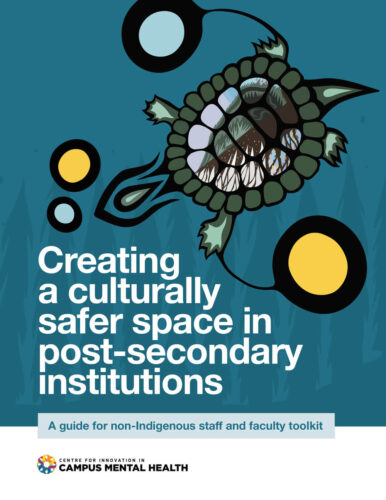
Artwork by Alicia Kejick (@aliciakejickcreations). Alicia is an Anishinaabe Muskego artist of the Lynx Clan (Bizhiw ndootem) from Treaty 3 Territory (Kenora & Iskatewizaagegan 39, Ontario). We are incredibly grateful to have permission to feature her beautiful work.